Sodium Silicate-Based Rigid Intumescent Thermal Insulation Board – SF-7
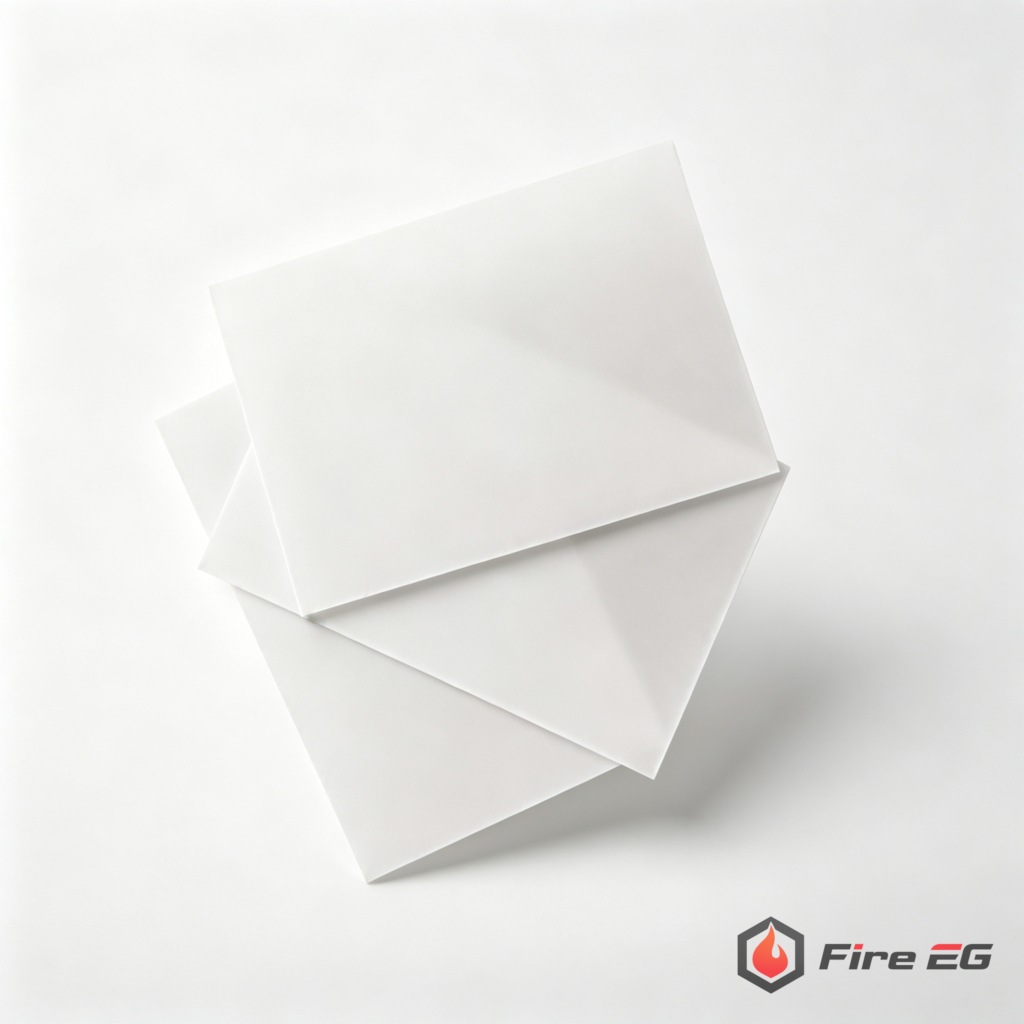
SF-7 is a fiberglass-reinforced, sodium silicate-based intumescent board that activates at 120°C to produce a rigid, non-combustible insulating foam layer. It expands perpendicular to the board surface with pressure up to 1.5 N/mm² — sealing gaps, absorbing heat, and preventing smoke and flame passage. Suitable for fire doors, fireproof safes, cable and pipe penetrations, railway rolling stock, and marine applications. Asbestos-free. Available in strips, custom shapes, and with self-adhesive backing.
Technical Specifications
| Parameter | Value |
|---|---|
| Product Model | SF-7 |
| HS Code | 3920999090 |
| Base Material | Sodium silicate (inorganic) |
| Reinforcement | Fiberglass |
| Color | White |
| Density | 1,400–1,600 kg/m³ |
| Water Content | 25–40% |
| Activation Temperature | 120°C (248°F) |
| Free Expansion | Height ≥6x original thickness (550°C, 15 min, 2mm sample) |
| Expansion Direction | Primarily perpendicular to board surface |
| Expansion Pressure | Up to 1.5 N/mm² |
| Pyrolysis Gases | Non-toxic |
| Asbestos Content | None |
| Dimension | Standard Range | Custom |
|---|---|---|
| Thickness | 2mm, 3mm | On request |
| Width | 10–450mm | On request |
| Length | 100–2,200mm | On request |
How SF-7 Works in a Fire
SF-7 contains 25–40% bound water within its sodium silicate matrix.When temperature exceeds 120°C:
① Water molecules begin to evaporate, generating internal vapor pressure
② The board expands perpendicular to its surface — not laterally —concentrating force directly against the gap being sealed
③ A structured, porous, non-combustible foam layer forms, providingboth a physical barrier and active thermal insulation
④ The foam layer absorbs radiant heat from the fire, producing acooling effect that protects adjacent materials
⑤ Pyrolysis gases released are non-toxic — no HCl, HBr orother harmful emissions
This mechanism differs from purely intumescent graphite strips: SF-7 seals by foam formation and vapor-driven expansion rather than graphite char expansion, making it well-suited for applications where a smooth, white, paint-compatible surface is required before activation.
Applications
Fire Doors and Windows
SF-7 is installed in rebates, grooves, and edge profiles of fire-rated doors and windows. When heated, it expands to seal the gap between door leaf and frame before smoke and flame can penetrate. Compatible with timber, steel, and composite door constructions.
Fireproof Safes and Security Cabinets
The combination of high expansion pressure (up to 1.5 N/mm²) and rigid foam formation makes SF-7 effective for protecting safe interiors from external fire — absorbing heat through the water evaporation mechanism and forming an insulating barrier around the contents.
Cable and Pipe Penetrations
SF-7 can be used as a sealing element or backing material in cable and pipe penetration firestop systems, particularly where a rigid, dimensionally stable material is required before activation.
Rail and Marine Applications
Asbestos-free composition, non-toxic pyrolysis gases, and compatibilitywith painted or coated surfaces make SF-7 suitable for fire protection in rail rolling stock and marine vessel applications subject to fire safety regulations.
Processing, Packaging & Storage
Machinability
SF-7 can be cut, stamped, and shaped at room temperature using standard cutting tools. Hot forming is possible after warming. Self-adhesive backing can be applied. Custom shapes and die-cut strips are available for OEM fire door and safe manufacturers.
Packaging
Cut strips and custom shapes: packed in cartons
– Full-size boards: packed in wooden cases, wrapped in plastic film
– Separation paper used between boards to prevent adhesion
torage Requirements
Store away from water, moisture, and heat. Maintain normal atmospheric conditions. Low temperatures maintain stability but may cause temporary brittleness; elasticity recovers at ambient temperature. Store horizontally on a level surface — do not stack excessively, as boards will deform under self-weight. Protect with plastic or film wrapping for long-term storage.
Note: Prolonged exposure to vapor, CO₂, and high humidity will affect performance over time. Sealed packaging is recommended for storage exceeding 3 months.
Frequently Asked Questions
Q: What is the difference between SF-7 and a standard intumescent strip?
SF-7 is an inorganic, sodium silicate-based board that expands via water evaporation — primarily perpendicular to its surface. Standard graphite intumescent strips expand via graphite intercalation chemistry. SF-7 is better suited where a rigid, white, paintable surface is required before activation, such as in visible fire door edges.
Q: Can SF-7 be painted or finished?
Yes. The white fiberglass-reinforced surface is compatible with water-based paints and coatings. Note that thick paint layers may slightly delay initial activation.
Q: Is SF-7 suitable for outdoor use?
SF-7 should be protected from prolonged exposure to moisture and water. For outdoor or high-humidity environments, appropriate encapsulation or protective coating is recommended.
Q: Can you supply pre-cut SF-7 strips for fire door assembly?
Yes. Standard and custom-cut strips are available for fire door, safe, and window manufacturers. Please provide required dimensions and annual volume for a quotation.
Q: What fire standards is SF-7 applicable to?
SF-7 is suitable for use in fire door and penetration assemblies tested to EN 1634, BS 476, ASTM E152, or equivalent standards, depending on the assembly design and certification scope.
[Request Sample or Quotation] [Download Technical Data Sheet]
Related Products:
[→ SA-3 Phosphate Intumescent Board – for hardware protection]
[→ HGYY-BW710 Intumescent Strip – for door & window gap sealing]
[→ FEG-1000E Acrylic Firestop Sealant – complementary sealing]